

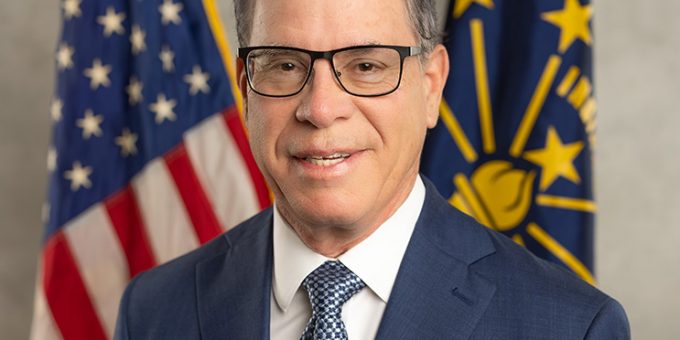
INDIANAPOLIS — In a major shake-up signaling escalating political tension over rising energy costs, Governor Mike Braun has removed former state lawmaker Andy Zay as chairman of the Indiana Utility Regulatory Commission (IURC).
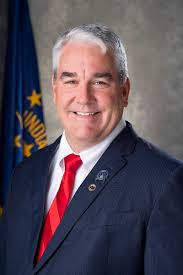
In a Monday evening announcement on X (formerly Twitter), Braun named sitting Commissioner Anthony Swinger as the agency’s new chairman, effective immediately. Zay, whom Braun appointed to lead the powerful regulatory panel just six months ago in January, will remain on the five-member commission as a regular member.

“Affordability is my top priority,” Braun wrote in his social media post. “And I am confident Chairman Swinger will deliver on that priority for Hoosiers.”
The sudden demotion comes less than a week after the IURC voted 3–1 to approve a controversial $71 million electricity base rate increase for AES Indiana—a decision that drew fierce, immediate backlash from consumer advocacy groups and the Governor himself.
While Zay was among the three commissioners who signed off on the rate hike, Swinger did not vote on the matter due to his extensive history with the case during his 25-year tenure at the Indiana Office of Utility Consumer Counselor (OUCC). Swinger served as the OUCC’s executive director of technical operations from 2022 to 2026 before Braun moved him to the IURC in January.
The Catalyst: The AES Indiana Rate Hike
The root of the sudden leadership change stems from the IURC’s final order issued on June 17, which granted AES Indiana—the electricity provider for roughly 500,000 customers in the greater Indianapolis area—a $71 million annual revenue increase.
While AES originally swung for a massive $193 million rate hike last year, and later agreed to a $91 million compromise in a partial settlement, the final $71 million order approved by regulators was still viewed as a gut-punch by consumer watchdogs. In fact, the OUCC had previously recommended that the IURC deny the hike entirely and instead enforce a $21 million rate reduction, arguing that the utility company was already highly profitable.
Following the approval, consumer advocates like the Citizens Action Coalition pointed out that data from recent Fuel Adjustment Clause (FAC) filings showed AES Indiana was already over-earning its allowed profit margins by $19 million.
The approved increase will roll out in two distinct phases:
- Phase One: Taking effect in July 2026 (estimated at less than $1/month for a typical customer using 1,000 kWh).
- Phase Two: Taking effect in January 2027 (bringing the total monthly impact up to an estimated $8.50 to $10 more per month over current bills).

AES Indiana President Brandi Davis-Handy defended the decision, noting that inflation has driven up the cost of grid reliability investments, such as vegetation management and storm restoration. As a concession in the order, AES has agreed not to seek another base rate increase before 2030.
Statehouse Friction Over “Kitchen Table” Affordability
Governor Braun did not hide his frustration with the regulatory body he spent the early months of his administration remaking. Following the June 17 vote, Braun blasted the decision as “disappointing” and urged the OUCC to formally petition for a rehearing of the case.
“Hoosiers have spent years tightening their belts and making tough financial decisions,” Braun stated last week. “It’s time for utility companies to do the same.”
The tension is amplified by a broader Statehouse push to rein in utility costs. During the 2026 legislative session, lawmakers passed House Bill 1002, a Republican-authored priority bill designed to require utilities to offer levelized payment options and impose stricter transparency and reporting requirements to protect consumers from erratic bill spikes.
A Collision Course: The Larger Energy Crisis
The leadership swap comes at a critical juncture for Indiana’s energy future. The IURC recently wrapped up an unprecedented investigative inquiry into energy affordability after a deluge of bipartisan complaints regarding massive bill spikes from utilities like NIPSCO, where electric bills had reportedly skyrocketed over 90% compared to a decade prior.
The IURC concluded a grueling schedule of 10 community listening sessions across the state on April 22 to gather direct testimony from struggling residents. Governor Braun has stated he intends to personally review the inquiry’s final findings.
More information on the IURC’s investigative inquiry is available here.
However, the state’s regulatory push for consumer affordability is on an absolute collision course with another centerpiece of Braun’s economic agenda: data center growth.
According to reports from the Indiana Conservative Energy Alliance, Indiana’s electricity consumption is anticipated to more than double by 2031, heavily driven by massive, energy-hungry data center developments. While these projects offer lucrative local tax income, energy grid experts warn that the state is approaching a resource cliff.
As the IURC transitions to Chairman Swinger’s leadership, the underlying challenge remains: finding a way to fuel Indiana’s rapid industrial data expansion without forcing everyday Hoosier ratepayers to pick up the multi-billion-dollar tab.

