

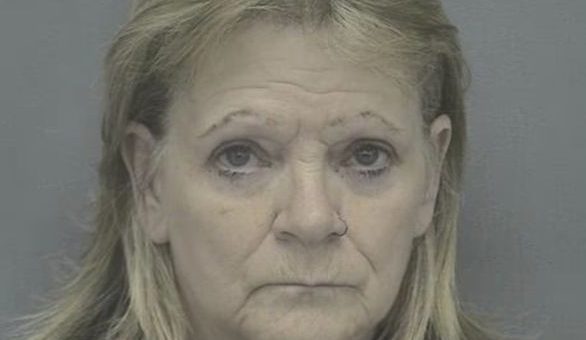
TERRE HAUTE — An Indiana woman who initially reported the natural death of her husband is now facing felony charges after a police investigation revealed she allegedly abandoned him to wither away alone at home while she spent weeks at her boyfriend’s house.
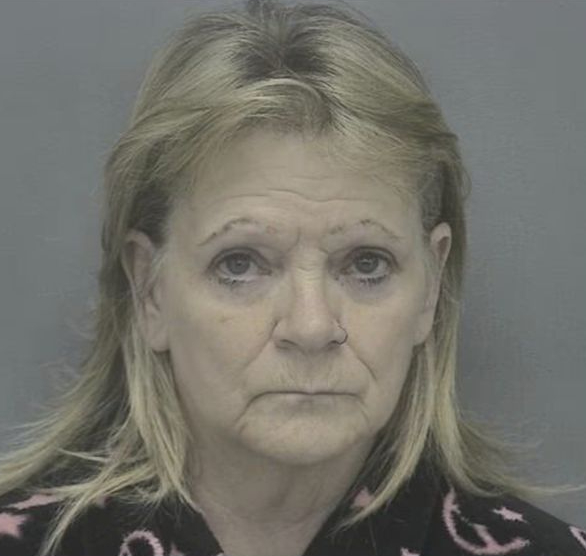
Rebecca Dewey, 62, is being held at the Vigo County Jail on a $50,000 cash bond. She faces a severe charge of neglect of a dependent resulting in death, following her arrest on May 28, 2026.
The arrest comes four months after she dialed 911 to report that her 62-year-old husband, Melvin Dewey, had passed away inside their Terre Haute home.
According to a probable cause affidavit, officers from the Terre Haute Police Department suspected foul play almost immediately upon arriving at the scene on January 27. Detectives noted that Rebecca Dewey provided “multiple inconsistent statements” regarding the timeline leading up to her husband’s death.
Initially, Rebecca claimed she returned home on the morning of January 27 after running errands with a male, whom she identified as a friend and former colleague of her husband. She told police she checked on Melvin, saw him sleeping in bed, and covered him with a blanket. She claimed that after taking a nap herself, she went to bring him soup around 3:00 p.m., only to discover he was cold and unresponsive.
However, as investigators pressed her on her husband’s deteriorating physical state, her narrative repeatedly shifted, prompting a deeper look into the couple’s living conditions.
Melvin Dewey suffered from advanced dementia and had endured multiple strokes, rendering him completely unable to care for himself.
Medical records show that on January 3, Melvin was found wandering the neighborhood in 25-degree weather wearing only a thin coat, ripped sweatpants, and no shoes or socks. He was severely disoriented and unable to tell anyone where he lived.
Following a brief hospitalization, a treating physician explicitly warned that Melvin was entirely dependent on 24-hour care and voiced doubts that his wife was capable of handling his severe cognitive impairment. Despite the warning, when Melvin was discharged on January 9, Rebecca assured medical staff she was fully capable of acting as his sole caregiver.
Instead, neighbors told police they stopped seeing Melvin entirely after his discharge. One neighbor informed detectives that Rebecca was “rarely present” at the house, only stopping by for “approximately ten minutes before leaving again,” and noted that it appeared she had abandoned the property altogether.
The neighbor explicitly asked investigators, “Did she bail on him and make him die?”
When confronted by police, the male, who was spending time with Rebecca, admitted he and Rebecca had been “hanging out quite a bit” over the previous few months, but clammed up and requested an attorney when asked if Rebecca was living with him.
Rebecca initially denied staying away from her husband, but changed her tune when confronted with the neighbors’ observations, eventually admitting to police that she had “not been doing what she should have been doing.”
A digital forensics team subsequently shattered her timeline. Cellphone location data extracted from Rebecca’s phone revealed she had not spent a single night at her own home since January 21. Furthermore, between January 15 and January 26, she only visited her incapacitated husband a total of 21 times—often for mere minutes.
During that same 11-day window, her cellphone pinged at the male friend’s residence more than 1,800 times.
While Rebecca was away, her husband was confined to his bed without access to food, water, or repositioning. A forensic autopsy conducted on Melvin Dewey concluded that his primary causes of death were severe, acute malnutrition and catastrophic skin breakdown resulting from total prolonged neglect.
Rebecca Dewey remains behind bars awaiting trial. Her next court appearance in Vigo County Superior Court has been scheduled for August 27th.
All individuals are presumed innocent until proven guilty in a court of law. This article is based on the information provided in the probable cause affidavit and does not represent a final determination of guilt or innocence.

