

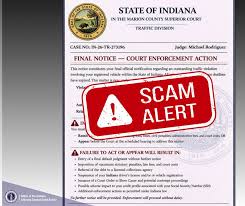
INDIANA – Indiana law enforcement agencies are issuing a statewide alert following a surge in sophisticated text message scams designed to trick residents into paying non-existent legal fines.
The scam begins with a text message containing an attachment or link to an “official-looking” legal document. These fraudulent papers claim the recipient owes immediate payment for a variety of offenses, including toll road violations, parking tickets, and moving violations.
While the documents may appear intimidating at first glance, authorities say a closer look reveals several glaring “red flags” that expose the fraud.
Anatomy of a Scam: What to Look For
Police have identified multiple inconsistencies in the fake documents that residents should be aware of:
- Vague Information: The documents fail to include the recipient’s actual name or any specific details regarding where the alleged violations took place.
- Legal Inaccuracies: Authentic Indiana citations will cite specific Indiana Code (IC) statutes. These fake documents lack any statutory references.
- Cluttered Paperwork: Moving violations, parking tickets, and toll issues are handled by different agencies and would never appear on a single document with the same case number.
- Fictitious Officials: The documents are often signed by a “Judge Michael Rodriguez.” A quick check of judicial records confirms there is no judge by that name currently serving in Marion County.
- Spelling Errors: In one of the most obvious blunders, the documents misspell the state capital as “Indianapells.”
The QR Code Trap
Many of these fraudulent notices include a QR code, purportedly to make “payment” easier. Police warn that scanning these codes often triggers a scam alert on modern smartphones or directs users to phishing sites designed to steal credit card information and social security numbers.
“Official court business and traffic citations are almost exclusively handled via the U.S. Postal Service or in person,” police noted in a public safety statement. “The government will not text you a QR code and demand immediate payment to avoid arrest.”
How to Protect Yourself
If you receive a suspicious text regarding legal fines, authorities recommend the following steps:
- Do Not Click: Avoid opening any links or scanning QR codes provided in the text.
- Verify Independently: If you are concerned you might actually have an outstanding ticket, contact your local Clerk of Courts or visit the official mycase.in.gov portal to search for legitimate records.
- Report the Scam: Forward suspicious messages to 7726 (SPAM) and report the activity to your local police department or the Indiana Attorney General’s Consumer Protection Division.
Residents are urged to share this information with family and friends—particularly the elderly—who are often the primary targets of these digital “scare tactics.”