

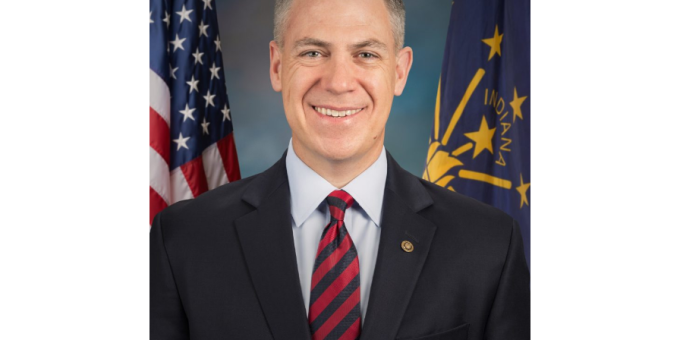
WASHINGTON, D.C. — Yesterday, Senator Jim Banks (R-Ind.) spoke on the Senate floor about fentanyl overdose victim Tyler Shamash and the importance of effective fentanyl testing in hospital emergency rooms.
The Health, Education, Labor and Pensions (HELP) Committee reported out Tyler’s Law unanimously on January 15th, and Senator Banks urged final passage of Tyler’s Law in the Senate.
See the full speech here.
See remarks below:
Sen. Banks: “I rise today to speak about a very important and potentially life-saving bill that I’ve introduced called Tyler’s Law. But before I talk about what this law and what this bill would do, I want to tell you a little bit about who it’s named after. Tyler Joseph Shamash was a bright, inquisitive, and compassionate boy from California. He was adventurous. He loved computers. He was interested in Bitcoin before most people had even heard of Bitcoin. And he had a knack for building and fixing things.
Tyler’s mother, Julie, said that Tyler was, quote, like a little professor. But in his early teens, Tyler started using marijuana and eventually became addicted to hard drugs. His family did what any family would do. They tried to help him with therapy programs and sober living facilities. But Tyler continued to struggle with addiction. And at one point, he overdosed.
On top of all of this, Tyler’s family and doctors didn’t know what the drugs that he was taking were or that they were laced with fentanyl. In October of 2018, Tyler was taken to the hospital from his sober living house with a suspected overdose. At the hospital, Tyler was administered a standard drug panel, which came back clean, so he was eventually discharged.
Shortly thereafter, though, Tyler died of a fentanyl overdose. He was just 19 years old.
When Tyler was still in the hospital, just hours before he passed. His mother, Julie, came to meet him there and asked the doctors if the drug test was really clean. She repeatedly asked if the drug panel tested for fentanyl. She was told yes, the drug panel did test for fentanyl because fentanyl is an opioid, which is what she was told.
Tragically, Mr. President, that’s just not true. Many doctors are unaware that the standard drug panels that many emergency rooms administer don’t detect fentanyl because fentanyl is a synthetic opioid.
This is a well-known problem. The College of American Pathologists has highlighted it. The Association for Diagnostics and Laboratory Medicine has warned labs about it. The Emergency Nurses Association has been advocating for a solution. But the problem continues. Sadly, fentanyl overdoses are a common story.
And a lot of families in my state, Mr. President, I know in your state too, know what it’s like to have a loved one who has suffered from a fentanyl overdose. If Tyler’s family and doctors who were treating him had known that Tyler was suffering from a fentanyl overdose, they could have given him a higher level of care. Perhaps things might have turned out a whole lot differently, though we can never know for sure.
But one thing is clear. Tyler deserved to be tested. Thousands of Americans poisoned by fentanyl deserve to be tested so that they can receive the proper level of medical care. Since Tyler’s tragic passing, his mother, Julie, who joins us in the gallery today, has been on a mission to make sure that other parents do not have to suffer the same unimaginable heartbreak that she did. I’ve had the pleasure of meeting with Julie and so many other moms and dads who have been affected by this, and I can say that Julie has turned tragedy into action. And she is an inspiring woman.
Mr. President, that’s why I was honored to introduce Tyler’s Law with my colleague Senator Padilla from California, truly a bipartisan effort. And it’s why I was proud when the HELP Committee, of which I’m a member, reported out Tyler’s Law unanimously just a couple of weeks ago.
Tyler’s law directs the Department of Health and Human Services to study whether hospital emergency departments should routinely test overdose patients for fentanyl. Based on the study’s result, HHS will also issue guidance to hospitals about whether and how they should implement fentanyl testing in the emergency room. This is really simple and common sense.
Mr. President, it’s hard to overstate just how badly needed this law is. President Trump is aggressively going after the drug traffickers, flooding our streets with deadly drugs. But the fentanyl epidemic is still taking far too many American lives.
Synthetic opioids like fentanyl killed about 48,000 Americans in 2024, and it continues to kill thousands more each and every month. But we could save many of those lives if emergency rooms were better equipped to detect and treat fentanyl overdoses. That is why it’s so important that HHS help hospitals adopt effective fentanyl testing.
Mr. President, I am pleased to see that Tyler’s law has bipartisan support and that that support continues to grow. I look forward to bringing Tyler’s law to a vote on this floor, the Senate floor, soon, so that we can begin to potentially save many, many lives.
Tyler’s life was cut short by fentanyl. But if we can pass Tyler’s law, if we can take this important step in making sure that those battling fentanyl or different drug addictions get the care and the testing that they need, then Tyler’s everlasting legacy will be saving lives.
And I’m for that, Mr. President, I know you’re for that. And I hope that my colleagues will join me in supporting this bill when it comes to the Senate floor soon.
With that, Mr. President, I yield the floor.”

