

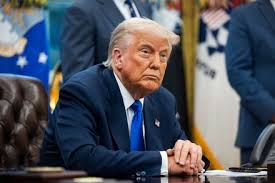
WASHINGTON, D.C. — President Donald Trump signed a massive $1.2 trillion spending package Tuesday afternoon, officially ending a four-day partial government shutdown and sending hundreds of thousands of federal employees back to work. While the move stabilizes the majority of the federal government through September, it leaves the Department of Homeland Security (DHS) on a “funding cliff” that expires in less than two weeks.
The deal, known as the Consolidated Appropriations Act of 2026, passed the House in a razor-thin 217-214 vote. The legislation successfully funds critical departments—including Defense, State, Treasury, and Labor—but provides only a temporary “stopgap” for DHS, valid until February 13, 2026.
The Catalyst: Tragedy in Minneapolis
The standoff over DHS funding was ignited by the recent deaths of two U.S. citizens, Alex Pretti and Renee Good, who were shot by federal officers during “Operation Metro Surge” in Minneapolis. Pretti, a VA nurse, was reportedly filming immigration enforcement operations when he was killed in January.
In response, House and Senate Democrats blocked full-year funding for DHS, demanding “dramatic change” in how federal law enforcement operates.
The “Accountability” Demands
As negotiations resume this week, Democrats, led by House Minority Leader Hakeem Jeffries, have laid out a strict list of requirements for any long-term DHS deal. They are demanding that Immigration and Customs Enforcement (ICE) and Customs and Border Protection (CBP) adopt protocols similar to local police forces, including:
- Mandatory Body Cameras: Requiring all agents to wear and operate cameras during public enforcement.
- Removal of Face Coverings: A ban on masks or tactical face coverings that obscure an agent’s identity.
- End to “Roving Patrols”: Stopping broad, mobile searches for undocumented immigrants in residential communities.
- Judicial Warrants: Requiring a judge’s signature, rather than a self-issued administrative warrant, to enter private homes.
If an agreement is not reached by the February 13 deadline, the Department of Homeland Security will face a full lapse in funding. Unlike the recent four-day “partial” shutdown—which primarily affected departments like Transportation and Health and Human Services—a DHS shutdown would directly hit:
- TSA: Security screenings at airports nationwide.
- FEMA: Federal disaster response and flood insurance programs.
- The Secret Service: Protective details during an election cycle.
- The Coast Guard: Maritime security and search-and-rescue.
While President Trump praised the bill as a “victory,” the vote revealed deep fissures within his own party. Twenty-one Republicans voted against the package, arguing it didn’t go far enough in cutting spending, while an equal number of Democrats crossed the aisle to support it and prevent a longer shutdown.
Speaker Mike Johnson (R-LA) expressed optimism about the next 10 days of negotiations but warned against “playing games” with national security. “We hope [Democrats] will operate in good faith,” Johnson said. “This is no time to risk the funding of those who protect our borders and our skies.”

