


BEDFORD – A recent study published in JAMA Neurology suggests that the use of hearing aids may significantly reduce the risk of developing dementia in younger adults. The findings reinforce the importance of early intervention for hearing loss (HL) as a potential strategy for dementia prevention.
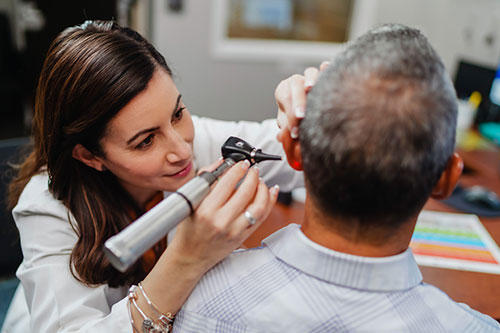
The analysis, which followed nearly 3,000 patients from the Framingham Heart Study for up to 20 years, found a substantial protective effect for those who addressed their hearing loss early.
Key study findings
The research focused on participants aged 60 and older without dementia at the time of their initial hearing assessment (1977-1979 and 1995-1998).
- Among participants who were younger than 70 years at the time of their hearing evaluation, those with hearing loss who used hearing aids had a 61% lower risk of developing all-cause dementia compared to those with unaddressed hearing loss.
- The study found no association between hearing aid use and incident dementia in people aged 70 years or older.
- In general, participants with no hearing loss had a 29% lower risk of incident all-cause dementia than those with unaddressed hearing loss.
The protective effect persisted even after adjusting for factors such as educational level and vascular risk, highlighting the importance of hearing correction itself.
Beltone Hearing Care Center weighs in on early intervention
The results underscore the value of proactive hearing care. Beltone Hearing Care Center, located at 2619 West 16th Street in Bedford, emphasizes that these findings provide compelling evidence for seeking a hearing evaluation sooner rather than later.

“In our clinic in Bedford, I see this all the time,” said Greg Inabnit, Beltone Hearing Instrument Specialist. “Patients who waited too long to treat their hearing loss often tell me they’ve just stopped trying in groups or don’t ask people to repeat themselves anymore. They sometimes say they feel ‘left behind’ in conversations. I believe that the damage done by untreated hearing loss isn’t just about missing sounds, it’s about missing connections, missing moments that keep the mind engaged. Helping someone hear clearly again almost always brings relief, and I truly believe it can help slow or lessen cognitive decline. What strikes me most is that when people don’t realize how much they’re missing in sound, their brains work much harder to understand speech, follow conversations, and distinguish noise. That constant extra effort seems to take a toll, leading to social isolation, fatigue, and frustration —all of which are known factors that feed cognitive decline over time.
Beltone Bedford is committed to helping people not just hear, but stay close to the things they love — like conversations, family, nature, and music.
“If you or a loved one is having trouble hearing, please come in, let us help. Hearing isn’t just about sound — it’s part of staying present, staying engaged, and keeping your mind strong,” added Inabnit.
The study’s senior author, Alexa S. Beiser, PhD, of Boston University, and the research team suggest that early intervention may be a crucial, non-invasive step in minimizing long-term cognitive decline. While previous studies, such as the 2023 ACHIEVE trial, have also explored this link, the current research explicitly points to the benefit of hearing aids for those under 70, suggesting that the timing of intervention matters.
The study was strengthened by its large sample size and long follow-up period, providing robust data supporting the need to prioritize hearing health for brain health.

