

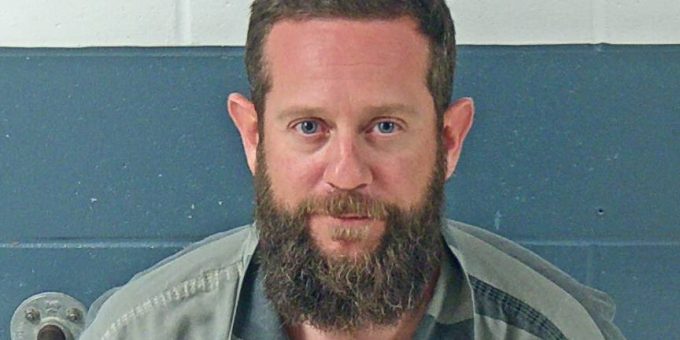
BEDFORD – A Bedford man was arrested early Saturday morning after Indiana State Police stopped his truck traveling the wrong way on a one-way street, preventing a potential head-on collision. The driver later registered a blood alcohol content more than three times the legal limit.
At approximately 12:54 a.m. on Saturday, September 27, Indiana State Police Trooper Cody R. Brown observed a black 2021 Ford F-250 traveling southbound on I Street near 8th Street in Bedford. I Street in that area is designated for northbound traffic only.
Trooper Brown immediately conducted a traffic stop, noting that if he hadn’t been driving in the right lane, the truck would have likely caused a head-on collision.
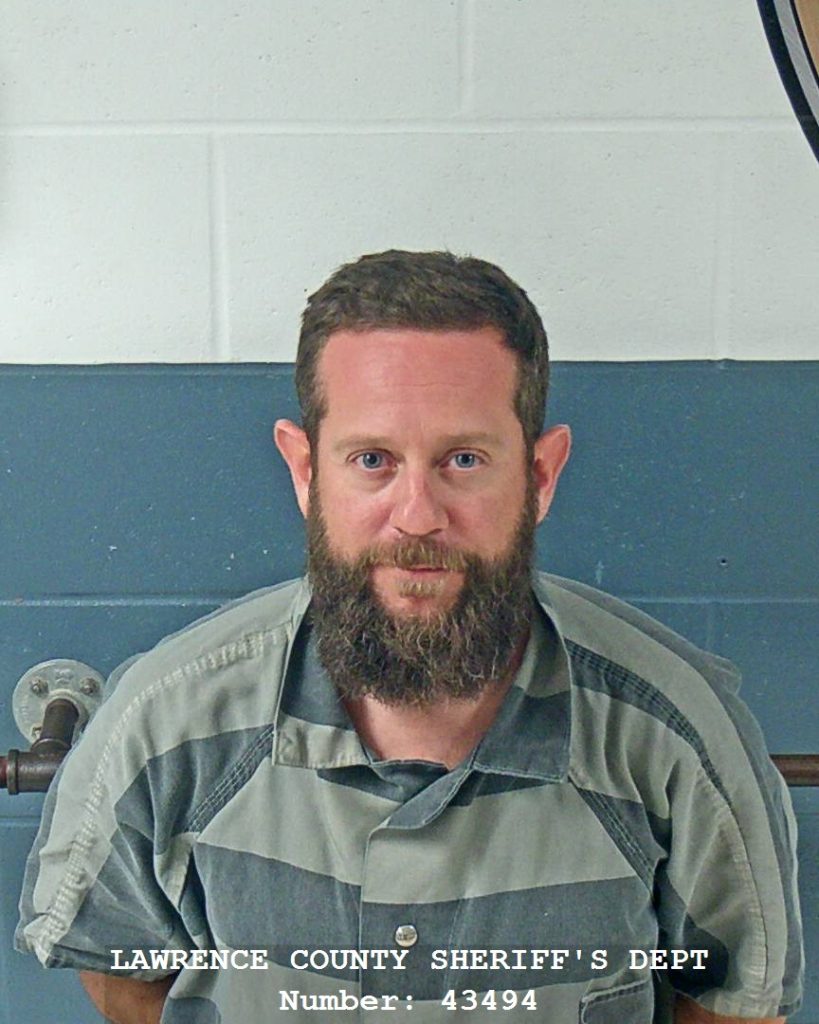
The driver was identified as Levi R. Godsey, 42, of Bedford. As the Trooper spoke with Godsey, he detected the odor of an alcoholic beverage coming from his breath and observed that his eyes were glossy. Godsey also exhibited poor manual dexterity by holding onto the truck. When informed of the odor of alcohol, Godsey stated that he had been drinking.
During the interaction, Godsey repeatedly tried to exit the vehicle and was ordered to stay outside. Though he never formally agreed or refused field sobriety testing, he kept asking about his options and informed the Trooper that he was “drunk”. Due to his unwillingness to give a clear answer and his attempts to get back in the vehicle, he was placed in handcuffs.
After being advised of the Implied Consent Law, Godsey refused a certified chemical test. However, a preliminary breath test administered at the scene yielded a blood alcohol concentration of 0.266, more than three times the legal limit of 0.08.
Godsey was ultimately charged with operating a vehicle while intoxicated with a blood alcohol content of 0.15 or greater, OWI with a blood alcohol content of 0.08 or more, and was issued a citation for driving the wrong way on a one-way street.
All individuals are presumed innocent until proven guilty in a court of law. This article is based on the information provided in the Probable Cause Affidavit and does not represent a final determination of guilt or innocence.

