

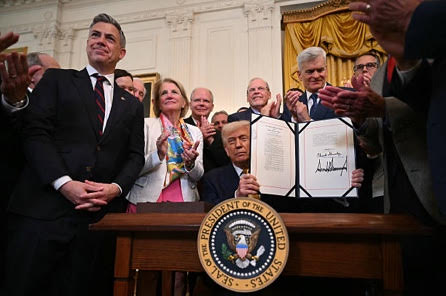
WASHINGTON, D.C. – On Wednesday, Senator Jim Banks (R-Ind.) joined President Trump at the signing of the Halt All Lethal Trafficking of Fentanyl (HALT Fentanyl) Act at the White House.
This historic bill permanently places fentanyl-related substances as a class into Schedule I of the Controlled Substances Act. It ensures law enforcement has the tools they need to keep these extremely lethal and dangerous drugs off our streets.
Senator Banks voted for this legislation to pass the Senate on March 14, 2025.
Senator Jim Banks (R-Ind.) said, “Too many families in Indiana have been devastated by the fentanyl crisis. President Trump took bold action in his first term, and by signing the HALT Fentanyl Act, he’s continuing that fight. This bill gives law enforcement the tools to stop traffickers and save lives.”
Key Provisions of the Halt All Lethal Trafficking of Fentanyl Act:
- Establishes the permanent scheduling of fentanyl-related substances (FRS) as a distinct class under Schedule I of the Controlled Substances Act.
- Enhances the legal and regulatory framework available to law enforcement agencies to effectively detect, intercept, and prosecute the illicit distribution and trafficking of fentanyl-related substances.
- Facilitates expanded access for qualified researchers and healthcare professionals to conduct investigations into the properties and health effects of fentanyl-related substances.
Senator Banks’ Legislation Addressing the Fentanyl Crisis:
Stop CCP Fentanyl Act: Imposes sanctions on Chinese officials unless fentanyl precursor trafficking is curbed.
Countering Beijing’s Weaponization of Fentanyl Act: Classifies fentanyl and precursors as chemical/biological weapons.
Protecting Kids from Fentanyl Act: Authorizes local educational agencies to use unexpended COVID-19 elementary and secondary school emergency relief funds for additional purposes.
Stop Fentanyl Border Crossings Act: Directs the Department of Health and Human Services (HHS) to restrict migration and imports from foreign countries to prevent the introduction of communicable diseases.

