


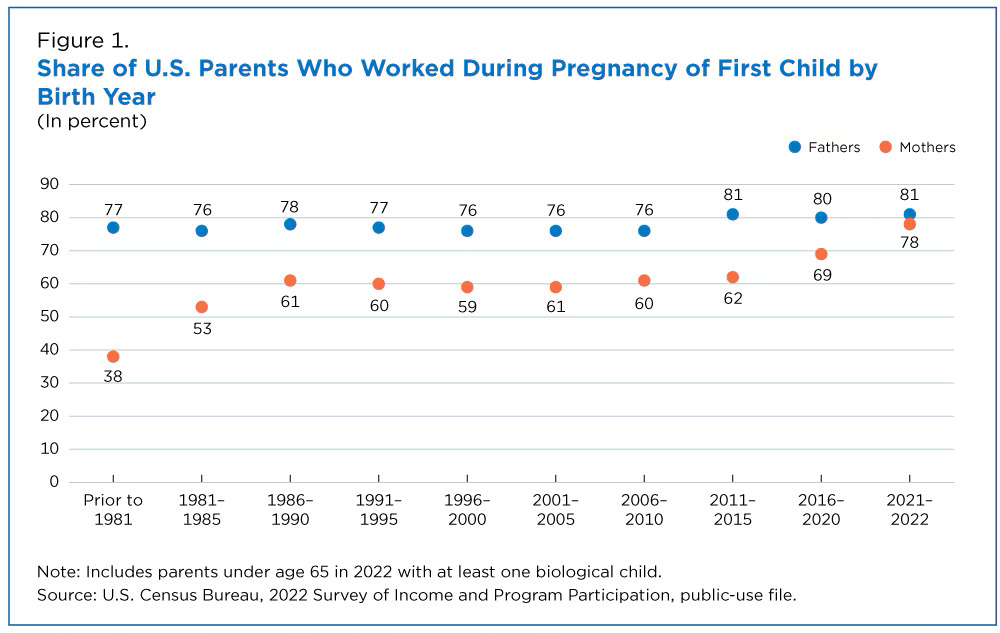
WASHINGTON D.C. – A new report from the U.S. Census Bureau highlights significant shifts in parental leave and employment patterns over the past half-century. The share of mothers who worked before the birth of their first child more than doubled to 78%, and a growing number of fathers are taking paid leave following the birth of their first child.
The report, based on the 2022 Survey of Income and Program Participation (SIPP), indicates that in the 2014-2022 period, approximately 50.1% of first-time fathers and 49.1% of first-time mothers took paid leave. This marks a notable increase for fathers compared to pre-1994 figures.
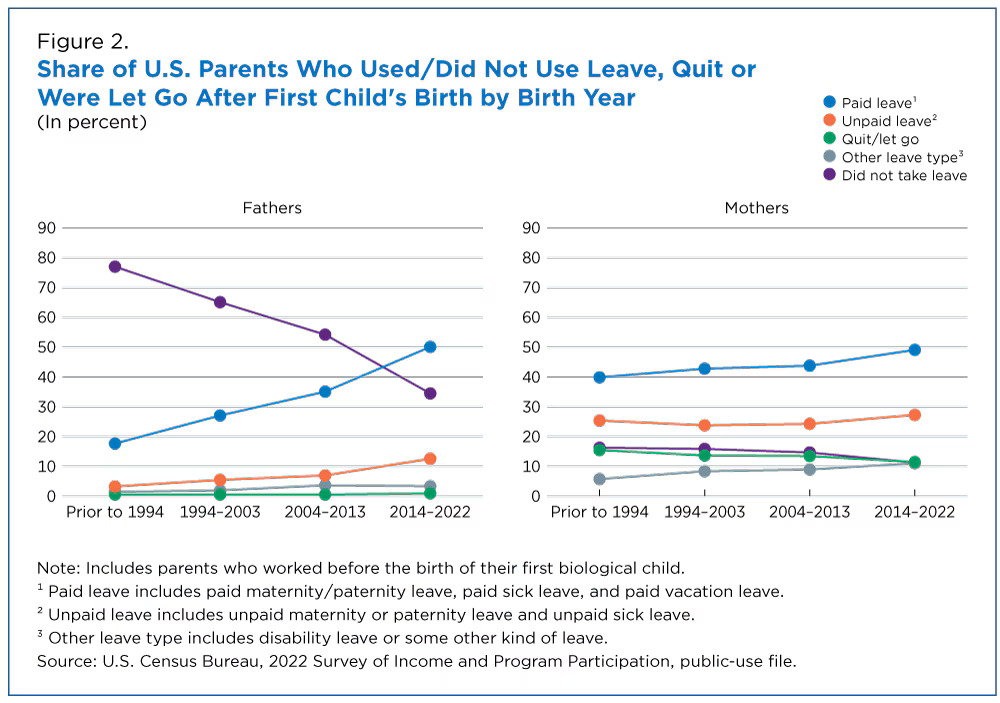
The policy landscape has evolved during this time, including the introduction of the Family and Medical Leave Act (FMLA), which guarantees eligible employees up to 12 weeks of unpaid, job-protected leave. The data shows an increase in new fathers taking unpaid leave, rising from 3.3% before the FMLA to 12.6% in the 2014-2022 cohort. However, the share of first-time mothers using unpaid leave remained relatively stable over the same period. Notably, a higher percentage of mothers (27.3%) than fathers (12.6%) took some form of unpaid leave in the 2014-2022 cohort.
Employment trends before the birth of a first child also show a dramatic change for mothers. The share of first-time mothers who worked before their child’s birth climbed from 38% for those whose children were born before 1981 to 78% in the 2021-2022 cohort. In contrast, the share of fathers working before their first child’s birth remained relatively stable, around 76% for earlier cohorts and 81% for the 2021-2022 cohort.
The report also found that the percentage of fathers who did not take any leave after the birth of their first child plummeted from 77% before 1994 to 35% in the 2014-2022 cohort. The percentage of mothers not taking leave remained steady for many years but decreased between the 2004-2013 and 2014-2022 cohorts. The share of mothers who quit or were let go from their jobs after their first child’s birth (about 14%) did not significantly change across the different birth cohorts studied.
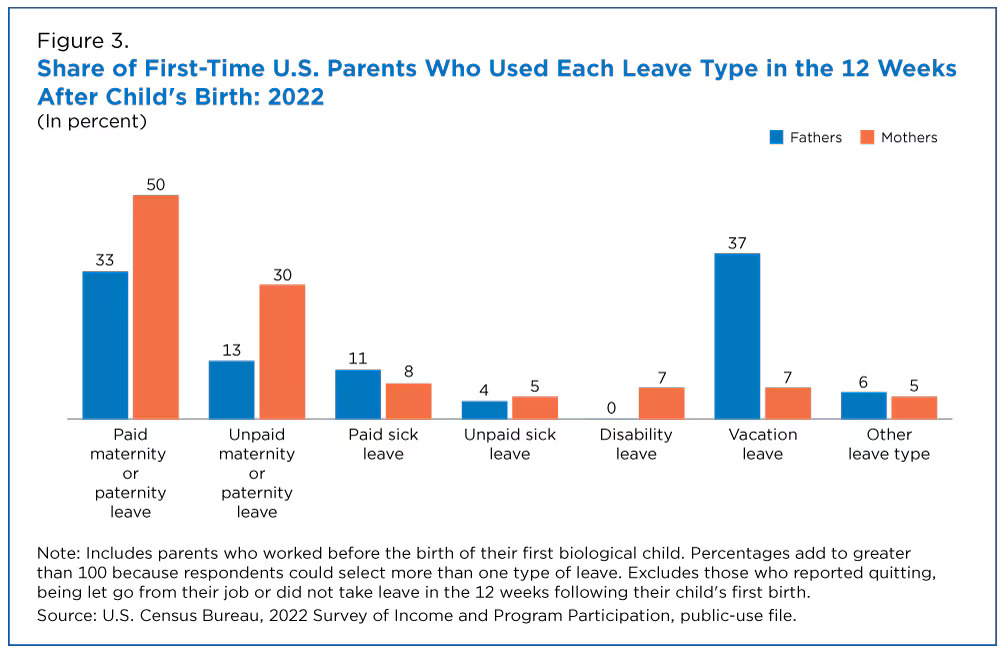
Regarding the types of leave taken within 12 weeks of a first child’s birth (based on aggregate 2022 survey data):
- Half of mothers took paid parental leave compared to one-third of fathers.
- First-time fathers were more likely to use vacation leave (37%) than mothers (7%).
- Almost a third of mothers utilized unpaid parental leave, compared to 13% of fathers.
- A slightly higher percentage of fathers (11%) used paid sick leave than mothers (8%).
The SIPP is a longitudinal survey that provides comprehensive income, employment, household composition, and government program participation data.
Nestor Hernandez and Rose M. Kreider are survey statisticians in the Census Bureau’s Social, Economic, and Housing Statistics Division who put together these statistics.

