

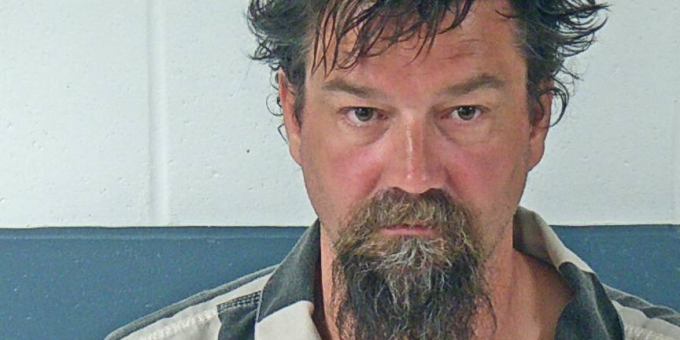
BEDFORD — A Bloomington man was taken into custody Friday night after a traffic stop for speeding and equipment violations led to the discovery of alleged intoxication and a prior conviction for operating while intoxicated.
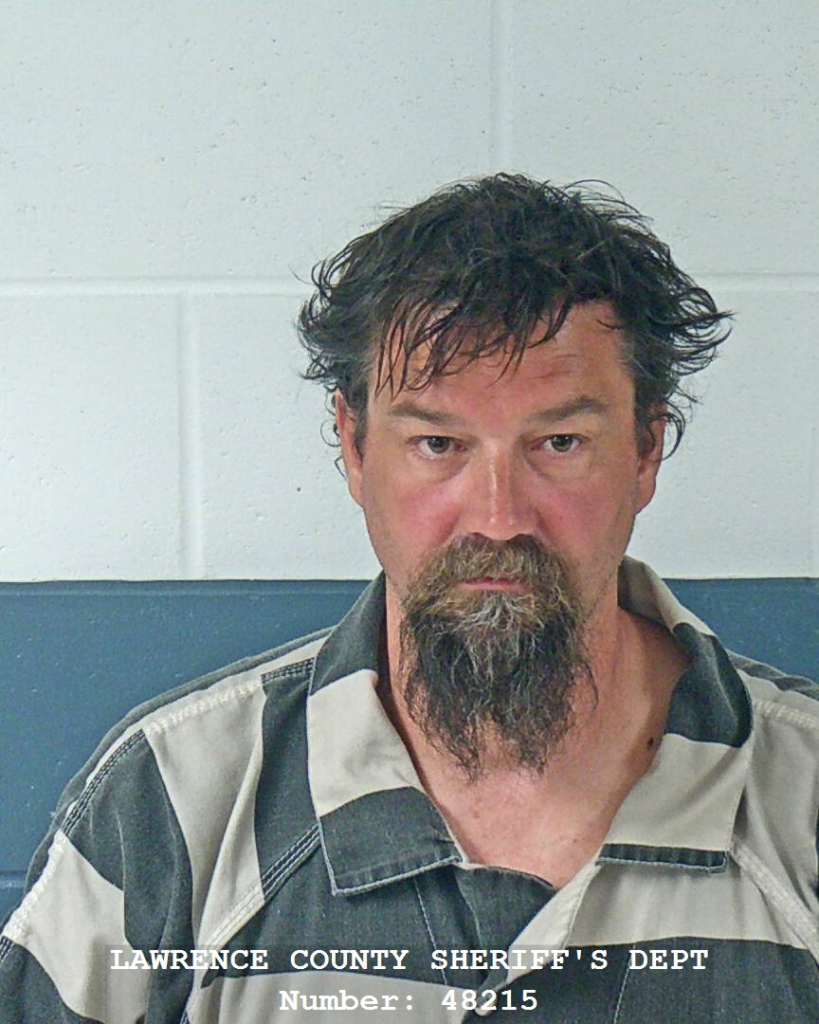
Brian L. Weddle, 45, was arrested on several preliminary charges following a stop by the Indiana State Police in Lawrence County.
According to probable cause affidavits, Trooper Cody R. Brown was patrolling John Williams Boulevard near T Street at approximately 8:41 p.m. when he observed a red 2001 Ford F-350 traveling with a non-functioning headlight.
The trooper estimated the truck’s speed at 43 mph in a 30 mph urban zone. Using radar, the officer confirmed the vehicle was traveling at 44 mph. After initiating a traffic stop, the vehicle pulled into a private parking lot.
Upon making contact with the driver, identified as Weddle, the trooper reported a strong odor of alcohol. Weddle allegedly admitted to consuming “a couple of beers” before driving.
Due to rainy weather conditions, standard field sobriety tests were not initially performed at the scene. However, a portable breath test (PBT) administered at the roadside showed a blood alcohol concentration (BAC) of .152—nearly twice the legal limit of .08.
Weddle was transported to the Bedford Police Department, where he displayed physical “clues” of impairment during a Horizontal Gaze Nystagmus (HGN) test. He was later taken to IU Health for a formal blood draw, which was completed at 10:04 p.m.
Further investigation revealed that Weddle had a previous conviction for operating while intoxicated within the past seven years.
Weddle faces several charges in Lawrence Superior Court 2, including OWI endangerment, OWI with a blood-alcohol level of 0.08 or greater, and OWI with a prior conviction. He was also issued citations for speeding and improper headlights.
Weddle’s 2001 Ford F-350 was identified as having an Indiana “truck” plate, though it was not listed as a commercial vehicle at the time of the stop.
All individuals are presumed innocent until proven guilty in a court of law. This article is based on the information provided in the probable cause affidavit and does not represent a final determination of guilt or innocence.

