


WASHINGTON, D.C. — The Environmental Working Group (EWG) has released its 2026 Shopper’s Guide to Pesticides in Produce, revealing that nearly 75% of non-organic fresh produce sold in the U.S. contains residues of potentially harmful pesticides.
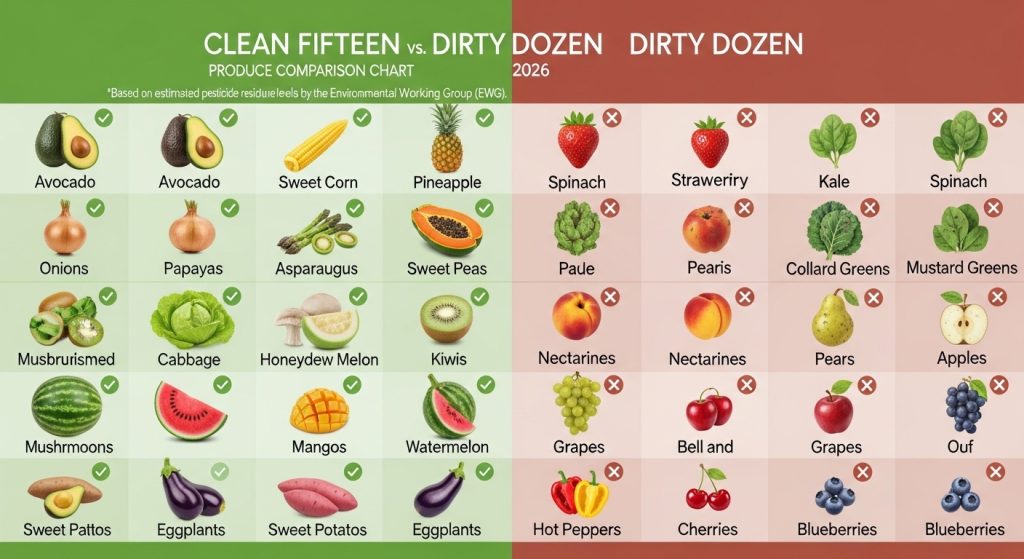
This year’s report, popularly known as the “Dirty Dozen,” highlights a concerning new trend: the frequent detection of PFAS, or “forever chemicals,” in some of the most common fruits and vegetables found in American kitchens.
The 2026 Dirty Dozen List
For the second year in a row, spinach holds the top spot as the produce item with the highest pesticide residue by weight. Kale, collard, and mustard greens followed closely at number two, with strawberries and grapes rounding out the top five.
The full 2026 Dirty Dozen includes:
- Spinach
- Kale, Collard & Mustard Greens
- Strawberries
- Grapes
- Nectarines
- Peaches
- Cherries
- Apples
- Blackberries
- Pears
- Potatoes
- Blueberries
The Rise of ‘Forever Chemicals’
A major takeaway from the 2026 report is the prevalence of PFAS pesticides. For the first time, the EWG systematically reported these “forever chemicals,” finding them in 63% of the Dirty Dozen samples. Three of the ten most frequently detected pesticides this year—including the fungicide fludioxonil—are classified as PFAS.
PFAS are notoriously persistent, meaning they do not break down in the environment or the human body. While long-term health effects are still being studied, they have been tentatively linked to reproductive issues, liver damage, and certain cancers.
A Safer Alternative: The ‘Clean Fifteen’
For shoppers looking to reduce exposure without breaking the bank on all-organic groceries, the EWG also released the Clean Fifteen—produce with the lowest detectable pesticide levels. Nearly 60% of these samples had no detectable residues at all.
- Top Picks: Pineapples, Sweet Corn, and Avocados.
- Others: Onions, Frozen Sweet Peas, Asparagus, Cabbage, and Papayas.
Expert Advice: Don’t Stop Eating Veggies
Despite the data, health experts and the EWG agree on one crucial point: The benefits of eating fruits and vegetables outweigh the risks of pesticide exposure. “Eating plenty of produce should remain the priority,” says the report. To minimize risk, experts suggest:
- Choosing Organic: Prioritize your organic budget for “thin-skinned” items like strawberries and spinach.
- Thorough Washing: Rinse conventional produce under cold running water for at least 15 seconds.
- Peeling: For items like apples or potatoes, peeling can remove a significant portion of surface residue.
The 2026 guide analyzed over 54,000 samples from the USDA and FDA, covering 47 different types of produce.

