

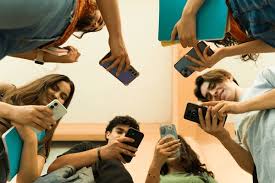
INDIANA — A new era of “unplugged” education is coming to Hoosier classrooms. Governor Mike Braun has officially signed Senate Bill 78 into law, expanding Indiana’s existing classroom phone restrictions into a comprehensive, statewide “bell-to-bell” ban.
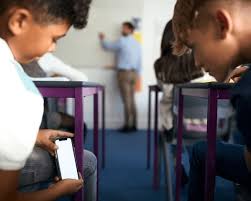
Starting with the 2026–2027 school year, students in Indiana public and charter schools will be prohibited from using or even possessing personal wireless devices—including cellphones, smartwatches, and tablets—for the entirety of the instructional day. This includes previously “open” times such as lunch periods and passing periods in the hallways.
North Lawrence Community Schools
North Lawrence (NLCS) has historically allowed individual administrators to determine how phones were handled if they became a distraction. Under the new law, the district is expected to move toward a more uniform “off and away” policy.
- Current Status: The 2025–2026 handbook already notes that unauthorized use and prohibits student cell phone use in classrooms during the academic day to reduce distractions. If found being used, it could lead to confiscation. Students may use their phones before/after school and during lunch periods.
- For the 2026–2027 year, expect the board to clarify whether phones must remain in lockers or if the district will invest in specific storage solutions.
- Board Meetings: Residents can track updates at the monthly NLCS Board of Trustees meetings.
Mitchell Community Schools
While some districts are exploring signal-blocking pouches, Mitchell Community Schools’ updated 2026–2027 policy emphasizes the use of existing resources to minimize distractions.
- Storage Requirement: All student cellphones must be secured in lockers upon arrival at school and remain there throughout the day.
- Hallway and Lunch Ban: Unlike previous years, where phones might have been allowed during passing periods or in the cafeteria, the new “bell-to-bell” mandate extends to all non-instructional times during the school day.
- Disciplinary Action: Any device seen or heard during school hours will be subject to confiscation until a parent or guardian can retrieve the device.
“Research and experience show that cell phones often hinder student focus and academic success,” the district noted in its student-parent handbook. “We are committed to a focused learning environment where students are engaged with their lessons and their peers.”
Orange County Community Schools
Paoli Community School Corporation: The district is expected to utilize a “Lockers Only” approach. Students will be required to power down devices upon entering the building and store them in their assigned lockers. Any device seen in a pocket or backpack during the day may be subject to immediate confiscation.
Orleans Community Schools: Orleans has been a leader in this transition, having already piloted secure, lockable pouches for some grade levels. For the 2026–2027 year, the district is considering expanding this system for grades 6–12, where students carry their phones in a sealed pouch that is only unlocked at the final bell.
Springs Valley Community Schools: The “Blackhawk” administration is leaning toward a “Phone Hotel” or classroom-based storage system for middle and high schoolers. This allows teachers to verify that devices are stored at the beginning of each period, though the new law requires they remain there even during lunch and breaks.
Monroe County Community School Corporation
MCCSC officials have expressed some concern regarding the cost and logistics of the “inaccessible” requirement, but they are moving forward with compliance.
- The “Locker” vs. “Pouch” Debate: MCCSC’s current policy allows phone use during lunch and passing periods. The new law ends this. The board is currently weighing whether to require all phones to stay in lockers or to implement a “pouch” system, which some teachers favor for easier enforcement.
- BYOD Changes: MCCSC has historically been a “Bring Your Own Device” (BYOD) friendly district. However, SB 78 requires that any teacher-directed digital work must occur on school-supplied devices after 2028, and strictly limits personal device use starting this July.
Why the Change?
The law builds on a 2024 policy that limited phone use during actual instruction. However, educators reported that the partial ban was difficult to enforce and that distractions continued to spill over from hallways and cafeterias into the classroom.
“A cellphone’s a distraction. It’s a distraction for me at 60,” said state Sen. Jeff Raatz, the bill’s author. “Teachers were struggling to enforce the old ban. It just was too much. Schools become more effective when students are focused on learning and each other, not their screens.”
Implementation: Pouches, Lockers, and Cubbies
While the mandate is statewide, the Indiana Department of Education (IDOE) is granting local school districts the flexibility to decide how they will keep devices “inaccessible.”
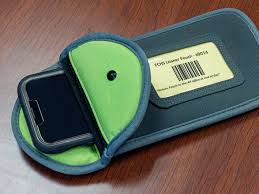
Common strategies being discussed by Indiana school boards include:
- Signal-Blocking Pouches: Using systems like Yondr, where students lock their phones in a padded fabric pouch at the first bell and unlock them at a station upon dismissal.
- Locker Storage: Requiring all personal electronics to remain powered off in student lockers.
- Classroom Cubbies: Placing phones in designated “phone hotels” or storage bins at the start of the day.
While the initial bill suggested “secure” storage, the final version allowed for more cost-effective solutions using existing resources to avoid unfunded mandates for smaller districts.
The Safety and Health Debate
The bill passed with a 36-12 vote, but not without significant debate. Opponents, including Sen. La Keisha Jackson, raised concerns about emergency communication. “You do not know what it feels like to be helpless without a cell phone in a situation like a school shooting,” Jackson argued.
Conversely, supporters like Kelly McKenna of End Chronic Disease point to the physiological benefits. Constant scrolling during an eight-hour school day can trigger stress chemicals, raising heart rate and blood pressure. “They’re not meant to be happening all day long,” McKenna noted, adding that reduced screen time is linked to better sleep and lower risks of chronic issues like obesity.
Exceptions to the Rule
Lawmakers kept exceptions “very narrow” to ensure the law remains enforceable. Devices may still be used if:
- They are required for medical management (e.g., monitoring blood sugar).
- They are listed in a student’s IEP or 504 plan.
- They are needed for language translation for multilingual learners.
- They are used as audio recorders for note-taking (without photo/video capability).
School districts have until July 1, 2026, to formalize their specific policies and notify families. While the change may be a culture shock for some students, early data from schools already using these “phone-free” models show a 44% improvement in student-reported learning and a significant decrease in behavioral referrals.