


INDIANA – A new legislative push at the Indiana Statehouse could fundamentally change how the state handles homelessness. Two recently filed bills aim to implement a statewide ban on “street camping,” introducing criminal penalties for individuals who sleep or seek long-term shelter on public land.
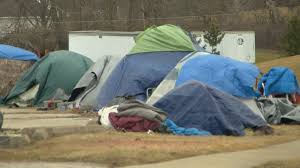
House Bill 1431, authored by State Rep. Doug Miller (R-Elkhart), was formally introduced on January 8, 2026. A companion measure, Senate Bill 285, authored by State Senator Cyndi Carrasco (R-Indianapolis), followed on January 12. Both bills are moving through their respective committees as part of the 2026 legislative session.


The twin bills utilize identical language to prohibit unauthorized use of state or local government land. Under the current drafts, the enforcement process follows a strict “warn-then-charge” structure:
- First Contact: Law enforcement officers must issue a formal warning. They are also required to offer the individual transportation to an authorized shelter or service location.
- Subsequent Violations: If an individual is found camping again at least 24 hours after the initial warning, they can be charged with a Class C misdemeanor. In Indiana, this is punishable by up to 60 days in jail and fines up to $500.
- Mandatory Enforcement: The bills prohibit local cities or counties from adopting “non-enforcement” policies. Effectively, local police and prosecutors would be legally required to uphold the ban.
A unique feature of this legislation is the “civil action” clause. If passed, the law would allow:
Indiana’s Attorney General, local business owners, and private residents to bring lawsuits against any political subdivision (such as a city or town) that fails to enforce the street camping prohibition. This provision is designed to ensure consistent enforcement across the state, preventing “sanctuary cities” for encampments.
The bills have sparked significant debate between those prioritizing public order and those advocating for the unhoused:
Proponents argue that the bills protect public safety and sanitation while encouraging individuals to enter “problem-solving courts” and diversion programs that the legislation explicitly allows.
Advocates for the homeless, including the Hoosier Housing Needs Coalition, argue that criminalizing the act of sleeping in public creates further barriers to employment and housing. They contend that without a significant increase in available shelter beds, the law simply “recycles” people through the jail system.
House Bill 1431 has been referred to the House Committee on Courts and Criminal Code.
Senate Bill 285 has been referred to the Senate Committee on Judiciary.
If approved by both chambers and signed by the governor, the new regulations are slated to take effect on July 1, 2026.

