

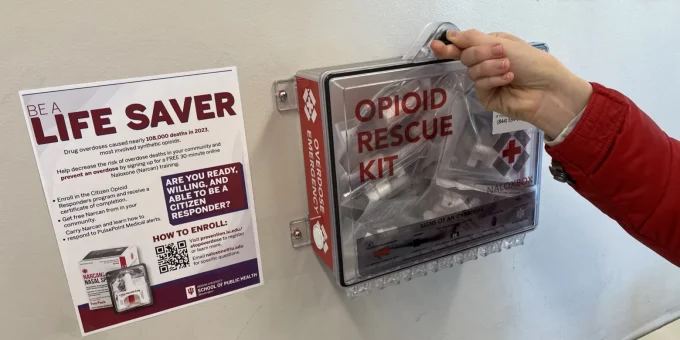
BLOOMINGTON — Indiana University is taking a proactive stance against the opioid epidemic by installing emergency naloxone boxes across all nine of its campuses. The initiative, funded by the IU Foundation and private donors, aims to provide 24/7 access to the life-saving medication used to reverse opioid overdoses.
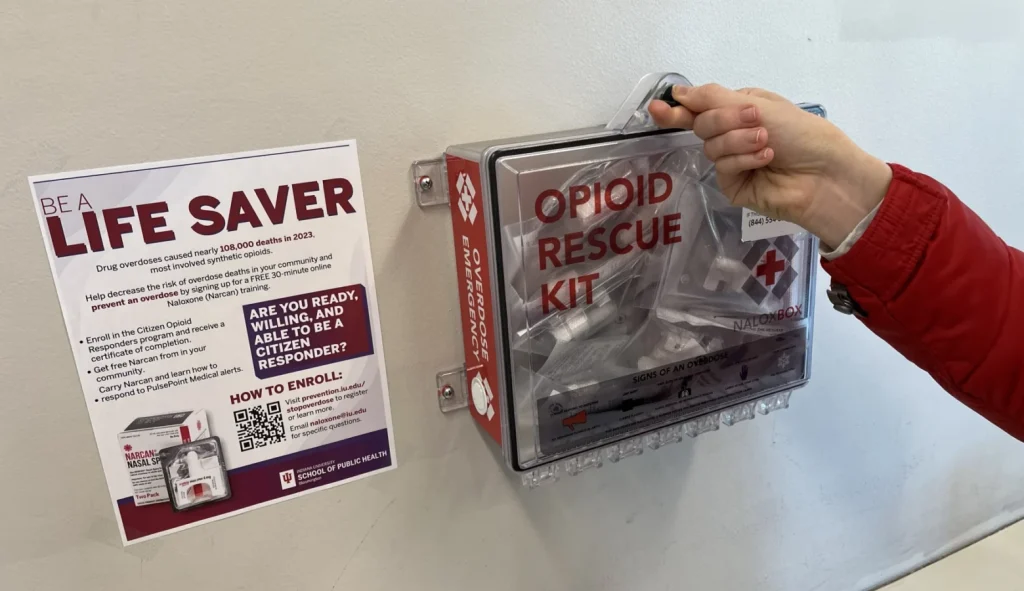
Naloxone, commonly known by the brand name Narcan, is a nasal spray that can rapidly counteract the effects of opioids, including potent synthetic substances like fentanyl.
The project is being led by Cris Henderson, a research associate with the IU School of Public Health’s Prevention Insights. Henderson compares the initiative to other standard emergency protocols.

“We want to normalize what it means to be trained and to carry Narcan, just like we’ve normalized what it means to be trained in CPR and first aid,” Henderson said.
On the Bloomington campus alone, private donors have contributed nearly $18,000 specifically for overdose prevention. Henderson is currently working with university leadership to place NaloxBox units in:
- Every campus residence hall.
- The two most-frequented gymnasiums on the IUB campus.
The boxes are expected to be installed and available for public use early next semester.
While physical access to the medication is vital, Henderson emphasizes that education is the key to effective intervention. “People actually need to feel capable, confident, and ready to administer it,” she noted.
To meet this need, IU offers a free, 30-minute online course called Citizen Opioid Responders.
The expansion comes at a critical time. While national and state-level overdose deaths have seen a recent decline—a trend the CDC partially credits to widespread naloxone distribution—overdose remains the leading cause of death for Americans aged 18 to 44.
A primary driver of this risk is fentanyl, a highly potent synthetic opioid often found laced into other substances like fentanyl, which leaves campuses, young people, and people in general at risk, said Henderson.

