

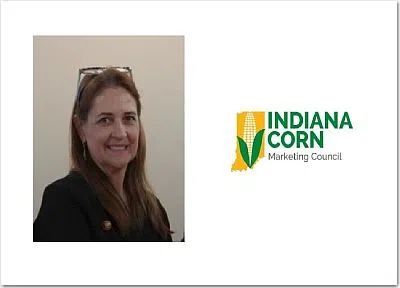
INDIANA – A leading figure in both agriculture and higher education, Knox County farmer Susan Brocksmith has been elected to serve as the 2026 president of the Indiana Corn Marketing Council (ICMC), the state’s corn checkoff program.
The election took place during the December ICMC Board Meeting, where new leadership was chosen to guide the organization’s strategic initiatives in the coming year.
Susan Brocksmith and her husband, Mike, are well-known in the local farming community, growing corn and soybeans on their family farm in Knox County. Beyond her work in the field, Brocksmith brings a wealth of administrative and business expertise to the role, currently serving as the Dean of the College of Business and Public Service at Vincennes University.
Brocksmith will lead the 17-member board of voting directors, who represent over 20,000 Indiana corn farmers.
The Mission of the Indiana Corn Marketing Council
The Indiana Corn Marketing Council (ICMC) was established by the Indiana General Assembly to promote the interests of corn growers in the state and to manage corn checkoff funds. The ICMC works to assist corn farmers through strategic investments in four key areas:
- Market Development: Expanding international and domestic demand for corn, including growth in ethanol exports and infrastructure.
- Sustainability: Supporting practices that improve the environmental, social, and economic sustainability of Indiana farms.
- Value Creation: Developing new value-added markets and products from corn for food, beverage, and industrial uses.
- Producer Engagement: Communicating information and the return on investment (ROI) of checkoff programs back to farmers.
The organization is funded by the corn checkoff, a mandatory assessment on certain types of corn marketed in the state. These funds are used solely for promotion, research, and market development, ensuring that Indiana corn remains competitive globally and that new uses for the crop are continuously explored.

