

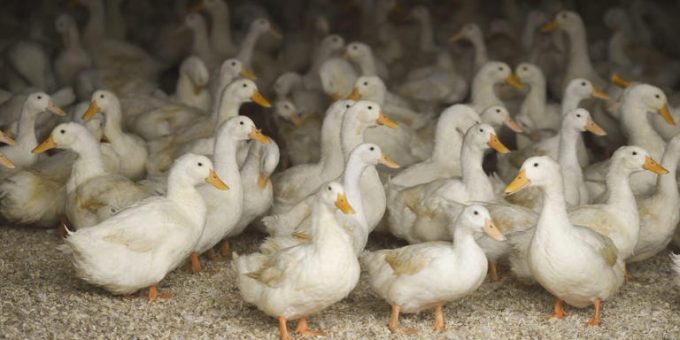
INDIANA — Four days after the initial detection of avian influenza, the Indiana State Board of Animal Health announced Monday night that it has quarantined four additional commercial duck facilities, bringing the total number of affected farms to five. The rapid expansion involves facilities across Elkhart and LaGrange counties and impacts more than 22,600 ducks.
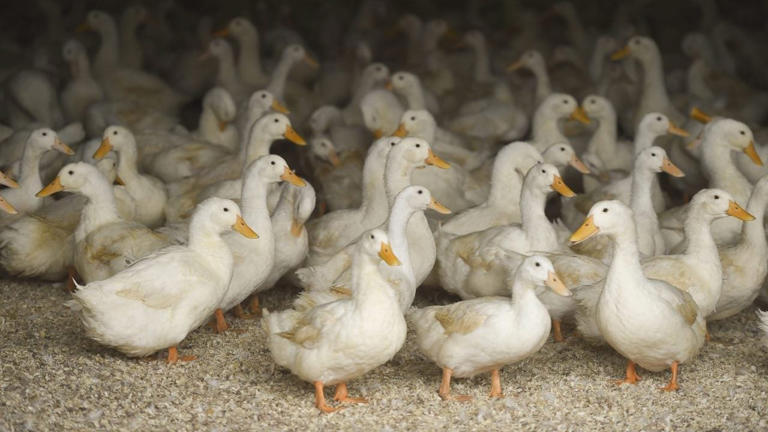
The outbreak involves the H5N1 influenza virus, which has been active across the United States since February 2022, affecting over 1,700 premises nationwide. Indiana had been declared bird flu-free since May 27 before last week’s initial quarantine.
The state’s quarantine response began on Thursday with a LaGrange County farm that housed 2,617 meat ducks.
By Friday, the board added a second facility to the quarantine list: an Elkhart County farm with 3,500 ducks raised for meat production.
The most significant expansion was announced on Monday, adding three more large-scale operations:
- A commercial meat farm in Elkhart County with 6,755 ducks.
- A commercial breeder developer with 5,755 ducks.
- A commercial breeder operation with 3,994 ducks.
These five facilities have a combined total of 22,621 ducks under quarantine.
Surveillance Zones Established
The outbreak has prompted state and federal agencies to establish enhanced surveillance zones for both commercial and noncommercial poultry facilities. These zones are now active across the three affected counties — LaGrange, Elkhart, and Noble County — to monitor and control the spread of the H5N1 virus.
The virus has been detected in various wild bird species, particularly waterfowl and raptors. Federal and state agencies, including the U.S. Department of Agriculture Wildlife Services and the Indiana Department of Natural Resources, are collaborating on intensified surveillance and testing efforts. The impact of the recent federal government shutdown on these critical surveillance programs is currently unknown.
Despite the expanding quarantines, the Indiana State Board of Animal Health has emphasized that avian influenza poses no food safety risk. Consumers can be assured that cooked poultry, eggs, and pasteurized dairy products remain safe to consume.
The risk to human health is considered low, with infections rare and primarily affecting those with close, direct contact with infected birds.
The outbreak is a significant concern for the state’s agricultural industry. Indiana was ranked No. 1 among states for duck production in 2022, selling more than 13 million ducks that year.