

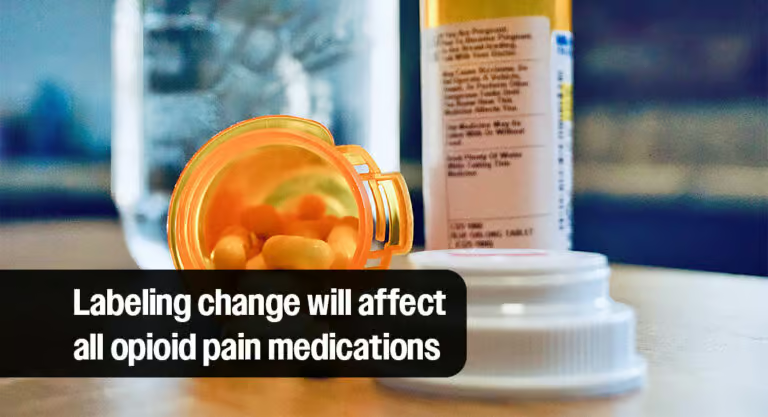
WASHINGTON, D.C. – In a significant move aimed at combating the ongoing opioid epidemic, the U.S. Food and Drug Administration (FDA) has announced major safety updates to the labels of all opioid pain medications. These changes, revealed on Thursday, August 1, 2025, are designed to provide more explicit warnings to both patients and doctors regarding the risks of addiction and overdose associated with long-term opioid use.
The decision follows years of intense scrutiny and criticism concerning the handling of the opioid crisis, which has claimed nearly one million American lives. The updated labeling will emphasize the dangers of misuse, addiction, and fatal overdoses, while also removing language that could be misconstrued as endorsing indefinite opioid use.

FDA Commissioner Marty Makary described the decision as a “long-overdue” step toward rebuilding public trust in the healthcare system. “The death of almost one million Americans during the opioid epidemic has been one of the cardinal failures of the public health establishment,” Makary stated in the announcement. He further emphasized the need to modernize approval processes and post-market monitoring to prevent a similar crisis from occurring again.
The updated labels will feature:
- Clearer data on addiction and overdose risk.
- Stronger dosing warnings for high or prolonged use.
- Guidance for safe discontinuation to prevent harm from sudden withdrawal.
- New details on drug interactions and overdose complications, including rare brain and digestive issues.
In addition to the labeling changes, the FDA has ordered an extra randomized, controlled clinical trial to directly examine the benefits and risks of long-term opioid therapy, promising close oversight of the study’s timeline.
The opioid epidemic’s roots trace back to the late 1990s when pharmaceutical companies aggressively promoted prescription opioids for chronic pain, despite their risks. This led to a surge in prescriptions in the 2000s, fueling widespread misuse and addiction. By the early 2010s, stricter prescribing guidelines led many users to turn to heroin. The crisis intensified after 2013 with the emergence of illicit fentanyl and other highly potent synthetic opioids, contributing to a sharp increase in overdoses. Over 80,000 opioid overdose deaths occurred in 2022 alone, with fentanyl involved in approximately two-thirds of these cases.
Federal responses to the crisis have included stricter prescribing limits, expanded access to overdose-reversal drugs like naloxone, and new requirements for clinical trials and post-market safety studies.